
Florida Traffic Laws: 2023 Quick Reference Guide
Navigating Florida’s roadways requires understanding its evolving traffic regulations. Recent legislative changes, effective as of late 2025 and early 2026, impact drivers.
Florida’s traffic laws are designed to ensure the safety and efficient movement of vehicles and pedestrians across the state. These regulations, continually updated through legislative action, aim to reduce accidents and promote responsible driving habits. Understanding these laws is crucial for all road users, including residents, tourists, and commercial drivers. Recent changes, documented by the Florida Department of Highway Safety and Motor Vehicles (FLHSMV), necessitate a current understanding of the rules of the road.
The FLHSMV provides comprehensive information regarding these updates, emphasizing the importance of reviewing complete legislation before making operational decisions. These changes span various areas, from Move Over Law modifications to evolving regulations concerning distracted driving and personal mobility devices like electric scooters. Staying informed about these adjustments is vital for legal compliance and, more importantly, for preventing potentially dangerous situations on Florida’s highways. Resources like the FLHSMV website and Florida Statutes Online offer detailed access to the latest legal information.
This quick reference guide serves as an introductory overview, but it should not be considered a substitute for consulting the official sources.
Understanding the Florida Driver’s License
A valid Florida driver’s license is essential for operating a motor vehicle within the state. The Florida Highway Safety and Motor Vehicles (FLHSMV) oversees the licensing process, offering various classes of licenses based on vehicle type and driving privileges. Obtaining a license requires meeting specific age, vision, and knowledge requirements, demonstrated through written and practical examinations.
Licenses are categorized, including Class E (standard passenger vehicles), Commercial Driver Licenses (CDL), and motorcycle endorsements. Each class carries distinct responsibilities and restrictions. The FLHSMV website provides detailed information on eligibility criteria, required documentation, and testing procedures. Maintaining a valid license necessitates timely renewal, often involving vision tests and potential knowledge updates.
Furthermore, Florida participates in interstate licensing agreements, allowing for reciprocal recognition of licenses from other states under certain conditions. Understanding the specific requirements for your license class and adhering to renewal schedules are crucial for legal and safe driving within Florida. Recent legislative updates may impact licensing procedures, so consulting the FLHSMV is recommended.
Vehicle Registration and Insurance Requirements
Florida law mandates that all vehicles operated on public roads must be properly registered and insured. Vehicle registration is handled through the Florida Highway Safety and Motor Vehicles (FLHSMV), requiring submission of necessary documentation, including proof of ownership and identification. Registration fees vary based on vehicle weight and type, and must be renewed annually or biennially.
Financial responsibility, typically demonstrated through auto insurance, is also legally required. Florida operates a “no-fault” insurance system, meaning drivers generally file claims with their own insurance company regardless of fault in an accident. Minimum coverage requirements include Personal Injury Protection (PIP) and Property Damage Liability (PDL).
Failure to maintain valid registration and insurance can result in fines, vehicle impoundment, and license suspension. Recent legislative changes may affect insurance requirements or registration procedures, so staying informed through the FLHSMV website is crucial. Proof of valid insurance must be readily available when requested by law enforcement.
Key Traffic Regulations
Florida’s traffic laws encompass speed limits, right-of-way protocols, and signal/sign obedience. Lane usage, passing maneuvers, and adherence to updated “Move Over” laws are vital for safety.
Speed Limits in Florida
Florida’s speed limits vary based on road type and location, demanding driver awareness. Generally, the speed limit on Florida’s interstate highways is 70 mph, though some rural stretches may maintain a 65 mph limit. Urban interstates typically have a 65 mph speed limit. On most state highways, the standard speed limit is 65 mph, decreasing in business or residential zones.
County roads and municipal streets generally have speed limits ranging from 25 mph to 35 mph, often posted with clear signage. School zones and work zones present significantly reduced speed limits, strictly enforced during designated hours. Drivers must observe these reduced limits to ensure pedestrian and worker safety.
It’s crucial to remember that speed limits are maximums, and drivers should adjust their speed based on weather conditions, traffic density, and visibility. Exceeding the posted speed limit carries financial penalties and potential points on your driving record. Regularly updated information regarding specific speed limits can be found on the Florida Highway Safety and Motor Vehicles (FLHSMV) website.
Right-of-Way Rules
Understanding Florida’s right-of-way rules is paramount for safe driving. Generally, vehicles approaching an intersection must yield to traffic already within the intersection or approaching on the right, unless otherwise indicated by signs or signals. When encountering a four-way stop, the first vehicle to arrive has the right-of-way.
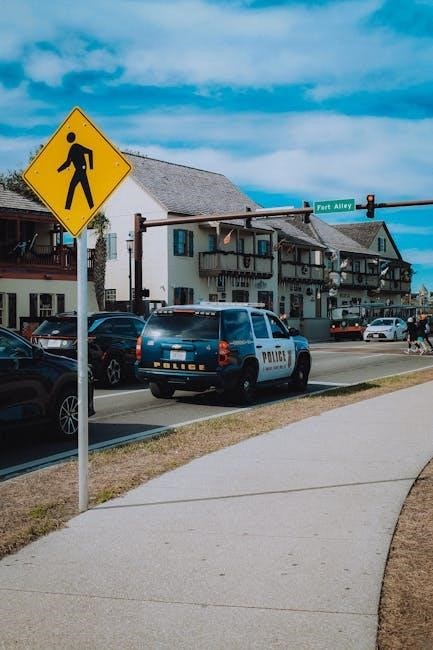
Pedestrians always have the right-of-way in marked crosswalks and unmarked intersections. Drivers must yield to pedestrians, ensuring their safe passage. When making a left turn, drivers must yield to oncoming traffic, even with a green light, unless a protected left-turn signal is present.
Emergency vehicles with activated lights and sirens have the absolute right-of-way. Drivers must immediately pull over to the right and stop until the emergency vehicle has passed. When entering a roadway from a driveway or private road, yield to all traffic and pedestrians. Failure to yield the right-of-way is a common cause of accidents and carries significant penalties.
Traffic Signals and Signs
Florida utilizes a standardized system of traffic signals and signs to regulate traffic flow and ensure safety. Red signals mandate a complete stop before the stop line or crosswalk. Green signals allow drivers to proceed, unless conflicting with pedestrians or other traffic. Yellow signals indicate the signal is about to turn red, requiring drivers to stop if safe to do so.
Flashing red signals are treated as stop signs, while flashing yellow signals indicate caution. Various signs convey important information, including speed limits, warnings of hazards, and directional guidance. Regulatory signs (e.g., stop, yield) must be obeyed, while warning signs alert drivers to potential dangers.
Understanding sign shapes and colors is crucial. Octagonal signs indicate stop, triangular signs warn of hazards, and diamond-shaped signs provide specific warnings. Ignoring traffic signals and signs is a serious offense, resulting in fines and potential license suspension. Always be attentive and responsive to these vital traffic control devices.
Lane Usage and Restrictions
Florida roadways employ various lane markings and restrictions to manage traffic efficiently and safely. Solid white lines delineate lanes traveling in the same direction, while broken white lines permit lane changes when safe. Solid yellow lines separate traffic flowing in opposite directions; crossing these is generally prohibited.
Double yellow lines indicate no passing, with variations denoting permissibility based on direction. High-Occupancy Vehicle (HOV) lanes are reserved for vehicles with a specified number of passengers during designated hours, promoting carpooling. Many highways feature express lanes, often requiring toll payment for access.
Lane restrictions may be implemented during construction or incidents, indicated by cones, barrels, and signage. Drivers must adhere to these restrictions to avoid congestion and ensure worker safety. Improper lane usage, such as weaving through traffic or disregarding lane markings, can result in citations. Always maintain awareness of lane designations and follow posted regulations.

Passing Regulations
Florida law dictates specific conditions for safe and legal passing maneuvers. Generally, passing is permitted on the left when the lane is clear and unobstructed, but only when it doesn’t endanger oncoming traffic. Passing on the right is allowed on divided highways with multiple lanes traveling in the same direction.

Drivers must signal their intention to pass and ensure sufficient space before returning to their original lane. Passing is prohibited in several situations, including near intersections, railroad crossings, and when visibility is limited. Double yellow lines universally signify no passing, regardless of direction.

Aggressive or reckless passing is strictly prohibited and can lead to severe penalties. Drivers should always prioritize safety and exercise caution when overtaking other vehicles. Failure to adhere to passing regulations can result in citations and contribute to traffic accidents. Maintaining a safe following distance is crucial for responsible passing.

Specific Traffic Violations & Penalties
Florida outlines significant penalties for traffic infractions. These range from fines and points on your license to potential license suspension, depending on the severity of the violation.
DUI Laws in Florida
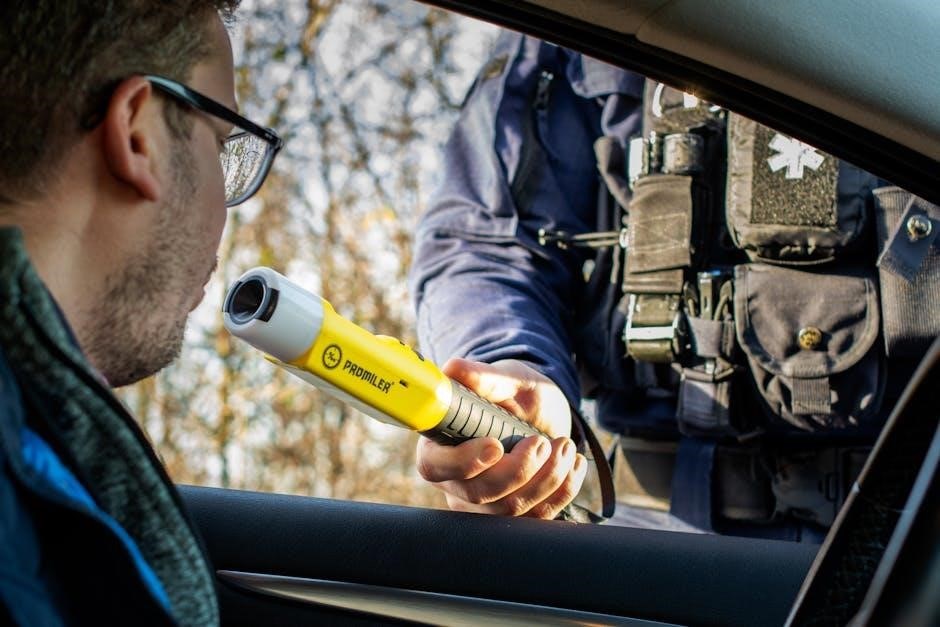
Florida maintains a strict stance against driving under the influence (DUI). A blood alcohol content (BAC) of 0.08% or higher is legally considered impaired for drivers 21 years or older. For commercial drivers, the limit is 0.04%, and for drivers under 21, any detectable amount of alcohol is prohibited.
First-time DUI offenders can face penalties including fines between $500 and $1,000, imprisonment for up to six months, and a mandatory license suspension of up to six months. Subsequent offenses carry significantly harsher penalties, including increased fines, longer jail sentences, and extended license revocations.

Florida law also addresses DUI manslaughter, a first-degree felony punishable by a substantial prison sentence. Implied consent laws require drivers to submit to breath, urine, or blood tests if requested by law enforcement. Refusal to comply can result in an automatic license suspension, independent of any DUI conviction. Furthermore, ignition interlock devices may be required for certain DUI offenders, preventing vehicle operation if alcohol is detected.
Reckless Driving Penalties
Reckless driving in Florida is a serious offense, exceeding typical speeding tickets; It’s defined as driving with willful or wanton disregard for the safety of persons or property. This encompasses actions like excessively speeding, weaving through traffic, or engaging in aggressive driving behaviors;
Reckless driving is a misdemeanor in Florida, punishable by fines up to $1,000 and imprisonment for up to 60 days. Additionally, a conviction results in three points assessed against the driver’s license, potentially leading to increased insurance rates or license suspension with subsequent points.
If reckless driving results in property damage, serious bodily injury, or death, the charges can escalate to felony offenses, carrying significantly harsher penalties, including substantial prison sentences. Courts may also order driving privileges to be restricted or revoked. Unlike a simple traffic infraction, reckless driving carries a criminal record, potentially impacting employment and other opportunities. Legal counsel is strongly advised when facing reckless driving charges.
Running a Red Light/Stop Sign
Disregarding traffic control devices like red lights and stop signs constitutes a significant traffic violation in Florida. Penalties vary depending on the circumstances and any resulting consequences. A standard red-light violation typically carries a fine, court costs, and three points assessed against the driver’s license, impacting insurance premiums.
However, running a red light resulting in a crash causing property damage, injury, or death escalates the penalties considerably. Such incidents can lead to criminal charges, including reckless driving or vehicular manslaughter, carrying substantial fines, imprisonment, and license revocation.
Many Florida intersections are equipped with red-light cameras, automatically issuing citations to vehicles entering the intersection after the signal turns red. These citations are civil infractions, but failure to pay can lead to license suspension. At stop signs, drivers must come to a complete halt before proceeding when safe, and failure to do so results in a citation and potential points on their license. Prioritizing adherence to these traffic signals is crucial for road safety.
Texting While Driving Laws
Florida law strictly prohibits texting while driving, recognizing the severe distraction it poses to motorists. The current legislation defines texting as manually entering letters, numbers, symbols, or other characters into a wireless communications device for the purpose of sending a text message, email, or instant message. This prohibition applies to all drivers on Florida roadways.
A first offense is considered a secondary violation, meaning law enforcement cannot pull a driver over solely for texting. However, if stopped for another traffic infraction, a texting violation results in a $60 fine plus court costs. Subsequent offenses carry higher fines and potential points on the driver’s license.
Hands-free devices are permitted, but drivers must activate them before beginning travel. The law emphasizes maintaining focus on the road, and any activity diverting attention can lead to accidents. Updates to distracted driving regulations in 2023 may further clarify permissible device usage, so staying informed is vital for safe driving practices.
Seat Belt Laws and Child Restraint Requirements
Florida’s seat belt law mandates that all drivers and passengers in the front seat must wear a seat belt at all times. This is a primary offense, meaning law enforcement can stop a vehicle solely for a seat belt violation, resulting in a fine and court costs.
Regarding child passengers, Florida law is very specific. Children age five and under must be secured in a crash-tested, federally approved child restraint device. This typically means a car seat or booster seat appropriate for the child’s height and weight. Children aged six through seventeen must wear a seat belt.
The law details specific requirements based on age, weight, and height, emphasizing proper installation and usage of child restraints. Failure to comply can result in fines and potential legal consequences. Regularly reviewing updated guidelines ensures adherence to the latest safety standards, protecting young passengers during travel.

Emerging Laws & Updates (2023)
Recent changes to Florida’s “Move Over” law and distracted driving regulations are now in effect. New legislation also addresses the use of electric scooters and personal mobility devices.
Changes to Move Over Law
Florida’s “Move Over” law has undergone significant revisions, expanding its protections to encompass a wider range of vehicles and situations. Originally designed to safeguard law enforcement officers and emergency responders on the roadside, the updated law now includes sanitation vehicles, utility service vehicles, and tow trucks displaying warning lights.
Drivers are now legally obligated to vacate the lane closest to these stopped vehicles, or if a lane change is unsafe, to slow down to a speed that is 20 mph below the posted speed limit. Failure to comply can result in substantial fines and points on your driving record. The intent is to provide a safer working environment for these essential personnel who often operate in hazardous conditions.
These changes reflect a growing awareness of the risks faced by roadside workers and a commitment to enhancing public safety. It’s crucial for all Florida drivers to familiarize themselves with the updated “Move Over” law to avoid penalties and, more importantly, to protect the lives of those serving the community. Resources detailing the specifics of the law are available through the FLHSMV website.
Updates to Distracted Driving Regulations
Florida continues to strengthen its stance against distracted driving, with recent updates aiming to reduce accidents caused by driver inattention. While a complete ban on handheld cell phone use while driving isn’t currently in effect statewide, the law prohibits texting while driving, and enforcement is becoming increasingly stringent.
Recent legislative adjustments focus on clarifying what constitutes illegal use of wireless communication devices. Specifically, the law prohibits manually entering information into a navigation system or making handheld calls while operating a vehicle in a designated school crossing, school zone, or work zone. These areas present heightened risks, demanding undivided driver attention.
Penalties for distracted driving violations can include fines, court costs, and points assessed against your driver’s license. Repeated offenses may lead to license suspension. Drivers are encouraged to utilize hands-free devices and to prioritize safe driving practices by minimizing all potential distractions before hitting the road. Staying informed about these evolving regulations is vital for all Florida motorists.
New Laws Regarding Electric Scooters/Personal Mobility Devices
Florida has seen a surge in the use of electric scooters and other personal mobility devices (PMDs), prompting legislative updates to address safety and operational concerns. These new laws aim to balance the convenience of PMDs with the need to protect both riders and pedestrians.
Recent changes clarify where PMDs are permitted to operate. Generally, they are restricted to sidewalks and bike lanes, with prohibitions on roadways unless specifically designated. Local municipalities retain the authority to further regulate PMD usage within their jurisdictions, potentially including designated scooter zones or speed limits.
Riders are now required to adhere to specific safety standards, including helmet use for those under 16, and often for all riders depending on local ordinances. Operating a PMD under the influence of alcohol or drugs is strictly prohibited, carrying penalties similar to those for driving under the influence. Furthermore, PMDs must be equipped with certain safety features, like functioning brakes and lights. Understanding these evolving regulations is crucial for both PMD riders and other road users.

Resources for Further Information

For comprehensive details on Florida traffic laws, consult the FLHSMV website and Florida Statutes online. Local law enforcement and legal aid offer assistance.
Florida Highway Safety and Motor Vehicles (FLHSMV) Website
The Florida Highway Safety and Motor Vehicles (FLHSMV) website (flhsmv.gov) serves as the primary official source for all things related to Florida driving. It’s an invaluable resource for accessing the most current and accurate information regarding traffic laws, vehicle registration, driver licensing, and safety initiatives. Crucially, the FLHSMV website hosts official legislative updates, detailing changes to traffic and motor vehicle laws enacted during each legislative session.
You can find summaries of these changes, along with links to the complete bill text available from the Florida Legislature’s website (leg.state.fl.us). This ensures drivers are aware of new regulations and can adjust their behavior accordingly. The site also provides downloadable handbooks, FAQs, and online services for tasks like renewing a driver’s license or registering a vehicle. Regularly checking the FLHSMV website is highly recommended to stay informed about any evolving traffic regulations, particularly given the recent updates as of late 2025 and early 2026. It’s a central hub for responsible driving in the Sunshine State.
Florida Statutes Online
For a comprehensive and legally definitive understanding of Florida’s traffic laws, consult the Florida Statutes online at leg.state.fl.us. This website provides direct access to the complete text of all enacted laws, offering a level of detail not found in summarized guides. While the FLHSMV website offers summaries, the Statutes represent the official legal code.
Navigating the Statutes requires some familiarity with legal terminology, but it allows drivers to verify specific regulations and understand their precise wording. Recent legislative changes, documented as late as December 2025, are reflected in the updated Statutes. It’s essential to review the complete law before making any policy or operational decisions based on summaries. The online platform allows for keyword searches, making it easier to locate specific sections related to traffic violations, vehicle requirements, or driver responsibilities. Remember that updates occur frequently, so referencing the most current version is crucial, especially considering changes noted through February 2026. This resource ensures legal accuracy and a thorough grasp of Florida’s traffic regulations.
Local Law Enforcement Agencies
For immediate information regarding traffic law enforcement and local ordinances, contacting your county or city’s law enforcement agency is invaluable. These agencies are responsible for enforcing state traffic laws within their jurisdictions and often have specific interpretations or enforcement priorities. They can provide clarity on frequently cited violations or recent enforcement campaigns.
While the Florida Highway Safety and Motor Vehicles (FLHSMV) offers statewide guidance, local agencies are the primary point of contact for reporting incidents, obtaining accident reports, and addressing specific traffic concerns. They are also aware of any temporary road closures or construction zones impacting traffic flow. Remember that legislative changes, documented as recently as February 2026, are implemented at the local level. Direct communication with local police departments or sheriff’s offices can provide the most up-to-date information on how these laws are being applied in your area. Utilizing these resources complements the broader understanding gained from the FLHSMV and Florida Statutes, ensuring a well-rounded awareness of local traffic regulations.
Legal Assistance Resources
Navigating Florida’s traffic laws can be complex, and legal counsel may be necessary when facing serious violations or penalties. Several resources are available to individuals seeking legal assistance, ranging from free consultations to full representation. The Florida Bar Association offers a lawyer referral service, connecting individuals with attorneys specializing in traffic law within their geographic area.
Additionally, numerous private law firms throughout Florida focus on traffic ticket defense and DUI cases. It’s crucial to research and select an attorney with a proven track record and experience handling cases similar to yours. Legal aid societies may provide assistance to those who qualify based on income. Remember that recent legislative updates, as of early 2026, may impact legal strategies. Consulting with a legal professional ensures you understand your rights and options, particularly concerning evolving laws related to distracted driving or vehicle regulations; Proactive legal guidance can significantly influence the outcome of your case and minimize potential consequences.