
Rockford Fosgate Wiring Guide: A Comprehensive Plan
This guide details Rockford Fosgate amplifier wiring‚ covering stereo‚ bridged‚ and tri-mode configurations. It emphasizes safety‚ component selection‚ and troubleshooting for optimal audio performance.
Embarking on a Rockford Fosgate car audio installation requires a solid understanding of wiring principles. Proper wiring ensures optimal performance‚ protects your investment‚ and guarantees a safe operating experience. This section lays the groundwork for successful installation‚ emphasizing the importance of referencing your amplifier’s owner’s manual for specific configurations.
Rockford Fosgate amplifiers offer versatile wiring options – stereo‚ bridged (mono)‚ and tri-mode – each suited to different audio setups. Understanding these modes‚ alongside crucial aspects like signal input‚ gain settings‚ crossover configuration‚ and speaker impedance‚ is paramount. Careful planning and execution are key to unlocking the full potential of your Rockford Fosgate system. Always prioritize safety and consult professional help if needed.
Understanding Amplifier Classes
Rockford Fosgate amplifiers utilize various classes – A‚ B‚ AB‚ and D – each with distinct characteristics impacting efficiency and sound quality. Class A amplifiers offer excellent fidelity but are inefficient‚ generating significant heat. Class B amplifiers are more efficient but can introduce distortion. Class AB represents a compromise‚ balancing efficiency and sound quality‚ commonly found in many Rockford Fosgate models.
Class D amplifiers are the most efficient‚ ideal for subwoofers requiring substantial power. They utilize pulse-width modulation (PWM) to minimize heat dissipation. Understanding these classes helps in selecting the appropriate amplifier for your specific needs. Power handling‚ conforming to CEA-2031 industry standards‚ is crucial for matching amplifiers to speakers‚ ensuring optimal performance and longevity of your car audio system.
Safety Precautions for Car Audio Wiring
Prioritizing safety is paramount when installing Rockford Fosgate car audio systems. Disconnect the vehicle’s negative battery terminal before commencing any wiring. Always use appropriately sized power and ground wires to prevent overheating and potential fire hazards. Securely route wires away from sharp edges‚ moving parts‚ and heat sources.
Employ high-quality fuse holders and fuses‚ positioned close to the battery‚ to protect the system from short circuits. Double-check all connections for tightness and proper insulation. Improper grounding can cause noise and damage components; ensure a solid‚ clean ground connection. Refer to your amplifier’s manual for specific wiring instructions and heed all warnings. Careful installation guarantees a safe and enjoyable audio experience.
Wiring Configurations for 2-Channel Amplifiers
Rockford Fosgate 2-channel amps offer versatile wiring options: stereo for front/rear speakers‚ bridged for mono subwoofer power‚ and tri-mode for mixed setups.
Stereo Mode Wiring
Stereo mode is the standard configuration for 2-channel Rockford Fosgate Punch amplifiers‚ designed to power separate left and right speakers. This setup delivers a traditional stereo soundstage‚ enhancing the listening experience with distinct channel separation. The wiring involves connecting the amplifier’s left positive and negative outputs to the left speaker‚ and the right positive and negative outputs to the right speaker.
Proper signal input is crucial; utilize left and right RCA cables connected to the head unit’s corresponding pre-amp outputs. Careful gain setting ensures optimal signal-to-noise ratio‚ preventing distortion. Remember to match speaker impedance to the amplifier’s specifications for safe and efficient operation. Refer to your amplifier’s owner’s manual for specific wiring diagrams and impedance guidelines to guarantee a successful stereo installation.
Bridged (Mono) Mode Wiring
Bridged mode transforms a 2-channel Rockford Fosgate amplifier into a more powerful mono amplifier‚ ideal for driving subwoofers. This configuration combines the power of both channels into a single output‚ effectively doubling the power output at a specific impedance. Wiring involves connecting the left and right positive terminals together‚ and the left and right negative terminals together. This combined positive and negative then connect to the subwoofer.
Crucially‚ impedance must be carefully considered; bridged mode typically requires a higher minimum impedance load. Accurate gain setting is vital to prevent distortion and protect the amplifier and subwoofer. Always consult your amplifier’s manual for the correct bridged wiring diagram and impedance specifications before proceeding with this configuration.
Tri-Mode (Stereo/Mono) Wiring
Tri-Mode‚ also known as Stereo/Mono or Mixed-Mono‚ offers versatility by allowing a 2-channel amplifier to power two stereo speakers and a subwoofer simultaneously. This configuration utilizes all channels – two for stereo and the bridged output for mono. Wiring involves running standard stereo connections to front/rear speakers‚ while bridging the remaining channels for subwoofer power.
This setup demands precise crossover configuration to correctly direct frequencies to each speaker type. Proper gain staging is essential to balance the stereo and subwoofer volumes. Refer to your amplifier’s manual for specific tri-mode wiring diagrams and recommended crossover settings. Careful planning ensures optimal sound quality and prevents damage to your components.

Wiring Diagrams for Specific Models
Detailed wiring schematics for popular Rockford Fosgate amplifiers‚ including the P300-12 and R2-1200X1‚ are crucial for correct installation and performance.
Rockford Fosgate P300-12 Wiring Diagram

The Rockford Fosgate P300-12‚ a powerful mono amplifier‚ requires careful wiring for optimal performance. This diagram illustrates the connections for power‚ ground‚ remote turn-on‚ RCA inputs‚ and speaker outputs. Ensure a proper power wire gauge is selected‚ typically 4 AWG‚ and securely connected to the vehicle’s chassis for grounding.
A dedicated fuse‚ sized appropriately for the amplifier’s current draw‚ must be placed within 18 inches of the battery. The remote turn-on wire activates the amplifier when the head unit is powered on. Connect the RCA inputs from the head unit‚ and finally‚ wire the subwoofer using the correct impedance for the P300-12’s specifications. Refer to the owner’s manual for precise wiring details and safety precautions.
Rockford Fosgate R2-1200X1 Wiring Diagram
The Rockford Fosgate R2-1200X1 is a versatile amplifier capable of various configurations. This wiring diagram details connections for power‚ ground‚ remote turn-on‚ and signal inputs. Utilizing a 4 AWG power wire is recommended‚ coupled with a fuse placed close to the battery for safety. Secure grounding to the vehicle’s chassis is crucial for optimal performance and minimizing noise.
RCA connections transmit the audio signal from the head unit‚ while speaker outputs connect to the subwoofer. Pay close attention to impedance matching to prevent damage to the amplifier or speaker. Always consult the owner’s manual for specific wiring instructions and to understand the amplifier’s features fully. Proper installation ensures reliable operation and maximizes audio quality.
Wiring Diagrams for Punch Series Amplifiers
Rockford Fosgate’s Punch Series amplifiers offer diverse wiring options depending on the model and desired output. These diagrams illustrate configurations for stereo‚ bridged (mono)‚ and sometimes tri-mode operation. Proper wiring is paramount for maximizing performance and preventing damage. Always prioritize safety by using appropriately sized power and ground wires‚ and incorporating fuses near the power source.
Refer to the specific amplifier’s owner’s manual for detailed wiring schematics. Understanding signal input‚ gain settings‚ and speaker impedance is crucial. Incorrect wiring can lead to distorted sound‚ overheating‚ or even amplifier failure. Careful attention to detail and adherence to the manufacturer’s guidelines will ensure a successful installation and exceptional audio quality.
Essential Wiring Components
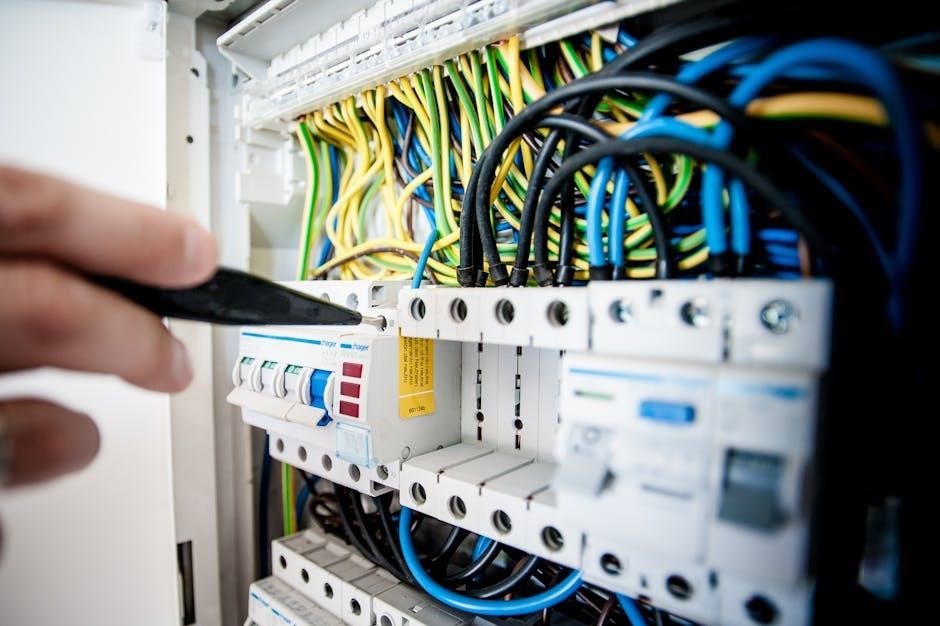
High-quality wiring‚ fuses‚ and connectors are vital for Rockford Fosgate systems. Selecting the correct gauge wire and proper grounding ensures safe‚ efficient power delivery.
Power Wire Gauge Selection
Choosing the correct power wire gauge is crucial for Rockford Fosgate amplifier performance and safety. Undersized wiring can restrict current flow‚ leading to voltage drop‚ reduced power output‚ and potential overheating. Conversely‚ excessively thick wire isn’t necessarily better and can be harder to work with.
Generally‚ a 4-gauge wire is recommended for amplifiers drawing up to 300 watts‚ while 2-gauge is suitable for 300-500 watts. Amplifiers exceeding 500 watts typically require 0-gauge wire. Wire length also matters; longer runs necessitate thicker gauges to minimize voltage drop. Always consult your amplifier’s specifications and Rockford Fosgate’s wiring charts for precise recommendations. Prioritize safety and optimal performance by selecting the appropriate wire gauge for your specific setup.
Grounding Techniques
Proper grounding is fundamental to a clean and reliable Rockford Fosgate car audio system. A poor ground connection introduces noise‚ distortion‚ and can even damage the amplifier. The ideal ground point is a bare metal chassis location‚ as close to the amplifier as possible.
Scrape away any paint or rust to ensure a solid metal-to-metal contact. Use a ring terminal crimped securely to the power wire‚ and bolt it down tightly. Avoid grounding to the vehicle’s body panels‚ as they may have poor conductivity. Multiple ground connections are not recommended; a single‚ robust connection is best. Verify the ground connection’s integrity after installation for optimal performance and to prevent unwanted electrical interference.
Remote Turn-On Wire Connection
The remote turn-on wire is crucial for activating your Rockford Fosgate amplifier when the car’s head unit is powered on. This wire‚ typically blue‚ signals the amplifier to switch from standby to operational mode‚ preventing battery drain and potential damage. Connect it to the head unit’s remote output (often labeled “remote” or “antenna”).
Ensure a secure connection using a properly crimped connector. Avoid using the power wire as a remote turn-on source‚ as this can cause the amplifier to remain on even when the vehicle is off. A dedicated remote wire provides a clean and reliable signal. Verify the wire’s functionality with a multimeter to confirm it receives 12V when the head unit is on.
Fuse Selection and Placement
Proper fuse selection and placement are paramount for protecting your Rockford Fosgate amplifier and vehicle’s electrical system. Always use fuses with the amperage rating specified in the amplifier’s manual – exceeding this rating risks damaging the amp‚ while a lower rating causes nuisance tripping. Place the primary fuse as close as possible to the battery’s positive terminal.
This fuse safeguards the entire power wire run. A secondary fuse‚ located within 18 inches of the amplifier‚ protects the final circuit. Use high-quality fuse holders designed for automotive applications. Regularly inspect fuses for signs of corrosion or damage‚ replacing them immediately if necessary. Correct fusing prevents potential fire hazards and ensures system reliability.
Signal Input and Output Considerations
Optimizing signal transfer involves RCA connections‚ impedance matching‚ gain settings‚ and crossover configuration‚ ensuring clean‚ powerful audio from your Rockford Fosgate system.
RCA Cable Connections
RCA cables are crucial for transmitting the audio signal from your head unit to the Rockford Fosgate amplifier. Utilizing high-quality‚ shielded RCA cables minimizes interference and ensures a clean‚ strong signal. Proper connection involves matching the colors – typically white or blue for the front channels and red for the rear or subwoofer channel.
Ensure a secure fit at both ends‚ avoiding loose connections that can introduce noise. When running RCA cables‚ keep them away from power wires to prevent induced noise. Consider using a ground loop isolator if you experience persistent humming or static. The quality of the RCA cables directly impacts the clarity and fidelity of your audio system‚ so investing in premium cables is highly recommended for optimal performance.
Speaker Impedance Matching
Proper speaker impedance matching is vital for amplifier performance and longevity with Rockford Fosgate systems. Impedance‚ measured in ohms‚ dictates the electrical load the amplifier sees. Mismatched impedance can lead to overheating‚ distortion‚ or even amplifier failure. Most Rockford Fosgate amplifiers are stable at 4 ohms‚ and some handle 2 ohms‚ but always consult your amplifier’s specifications.
Connecting speakers with too low an impedance (e.g.‚ 2 ohms to an amplifier only rated for 4 ohms) stresses the amplifier. Conversely‚ a higher impedance (e.g.‚ 8 ohms) may result in reduced power output. Understanding series and parallel wiring configurations is key to achieving the correct impedance. Referencing the CEA-2031 standards ensures compatibility and optimal sound quality.
Gain Setting Procedures
Correct gain setting is crucial for maximizing audio quality and preventing distortion with Rockford Fosgate amplifiers. The gain control doesn’t adjust volume; it matches the amplifier’s input sensitivity to the head unit’s output voltage. Begin with the gain control at its lowest setting. Slowly increase the gain while playing music‚ monitoring for any signs of clipping or distortion.
Use a Digital Multimeter (DMM) to measure the AC voltage at the amplifier’s input. Adjust the head unit’s output until it reaches the amplifier’s rated input sensitivity. Then‚ fine-tune the gain for the desired volume level without distortion. Improper gain settings can damage speakers or the amplifier itself‚ so proceed cautiously and refer to your owner’s manual.
Crossover Configuration
Rockford Fosgate amplifiers often feature built-in crossovers‚ essential for directing specific frequencies to the appropriate speakers. These crossovers can be high-pass‚ low-pass‚ or band-pass‚ allowing precise control over the audio spectrum. High-pass filters block low frequencies‚ ideal for tweeters and midrange drivers‚ while low-pass filters block high frequencies‚ suited for subwoofers.
Proper crossover settings ensure optimal speaker performance and prevent damage. Carefully consider the frequency response capabilities of each speaker when configuring the crossover points. Refer to the amplifier’s manual for detailed instructions on adjusting crossover frequencies and slopes. Incorrect settings can lead to poor sound quality or speaker damage‚ so precise configuration is vital.
Troubleshooting Common Wiring Issues
Diagnosing wiring problems involves checking power‚ ground connections‚ and signal paths. Common issues include no power‚ distorted sound‚ humming‚ and amplifier overheating – address these promptly.
No Power to Amplifier
If your Rockford Fosgate amplifier receives no power‚ systematically check several key areas. First‚ verify the fuse – both the amplifier’s internal fuse and the main power wire fuse near the battery. A blown fuse is a common culprit and requires replacement with the correct amperage rating.
Next‚ inspect the power and ground connections. Ensure they are secure‚ clean‚ and free from corrosion. A loose or corroded connection can interrupt the power supply. Confirm the remote turn-on wire is properly connected to the head unit and receiving a signal when the head unit is powered on.
Finally‚ use a multimeter to test voltage at the amplifier’s power and ground terminals. If voltage is absent‚ trace the power wire back to the battery‚ checking for breaks or shorts along the way. A faulty ground connection is also a frequent cause‚ so double-check its integrity.
Distorted Sound
Distorted sound from your Rockford Fosgate amplifier often indicates signal clipping or impedance mismatch. Begin by reducing the gain settings on the amplifier. Excessive gain can overload the amplifier‚ causing distortion. Ensure the input signal level from your head unit isn’t too high; adjust the head unit’s output level accordingly.
Next‚ verify speaker impedance. Mismatched impedance (e.g.‚ wiring speakers with too low an impedance) can strain the amplifier and cause distortion. Confirm your speakers’ impedance matches the amplifier’s specifications. Check for loose speaker wires or damaged speakers‚ as these can also contribute to distortion.
Finally‚ examine the RCA cable connections for damage or interference. Poorly shielded RCA cables can pick up noise‚ resulting in a distorted signal. Try using higher-quality RCA cables and ensure they are securely connected.
Humming or Noise in Audio
Humming or unwanted noise in your Rockford Fosgate system typically stems from grounding issues or signal interference. The most common cause is a poor ground connection; ensure the amplifier’s ground wire is securely connected to a clean‚ unpainted metal surface on the vehicle’s chassis. Keep the ground wire as short as possible.
RCA cables can also introduce noise. Use high-quality‚ shielded RCA cables and route them away from power wires to minimize interference. Check for loose RCA connections at both the head unit and amplifier. A faulty ground loop isolator might be necessary if the noise persists.
Inspect the power wire routing; running power and RCA cables parallel for extended lengths can induce noise. Consider rerouting the cables to separate them physically.
Amplifier Overheating
Overheating in a Rockford Fosgate amplifier indicates insufficient cooling or excessive load. Proper ventilation is crucial; ensure the amplifier isn’t enclosed in a small‚ airtight space. Obstructions blocking airflow should be removed immediately. Check that the amplifier’s heatsink is clean and free of dust accumulation‚ as this hinders heat dissipation.
Excessive volume levels‚ driving speakers below their rated impedance‚ or a failing amplifier can also cause overheating. Verify speaker impedance matches the amplifier’s specifications. Reduce the volume and monitor if the temperature decreases.
If overheating persists‚ the amplifier may require professional servicing. A faulty internal component could be the root cause‚ demanding expert diagnosis and repair.
Advanced Wiring Techniques
Optimizing power delivery involves distribution blocks‚ wiring multiple amps‚ and careful planning. These techniques ensure stable‚ clean power for superior Rockford Fosgate performance.
Using a Distribution Block
Distribution blocks are crucial when powering multiple Rockford Fosgate amplifiers‚ ensuring each receives adequate and stable power. Instead of running multiple power wires directly from the battery‚ a single‚ heavy-gauge wire connects to the distribution block. From there‚ individual wires run to each amplifier.
This method minimizes stress on the battery and alternator‚ improving overall system efficiency. Select a distribution block rated for the total current draw of all connected amplifiers‚ adding a safety margin of at least 20%. Proper grounding of the distribution block is essential for noise reduction and optimal performance. Always use appropriately sized fuses near the battery and at each amplifier’s power input for safety and protection against short circuits.
Wiring Multiple Amplifiers
Successfully wiring multiple Rockford Fosgate amplifiers requires careful planning and execution. Begin by calculating the total current draw of all amplifiers to determine the necessary power wire gauge and battery/alternator capacity. Utilize a distribution block to simplify wiring and ensure each amplifier receives consistent power.
Stagger the power leads from the distribution block to prevent overloading a single point. Ground each amplifier individually to a solid chassis ground point‚ keeping ground runs short and direct. Remember to fuse each amplifier’s power wire as close to the battery as possible. Proper signal routing and gain staging are also vital to avoid noise and distortion when operating a multi-amplifier system.
Optimizing Power Delivery
Maximizing power delivery to your Rockford Fosgate amplifiers is crucial for achieving peak performance. Employ high-quality‚ appropriately gauged power and ground wires to minimize voltage drop. A short‚ direct power run from the battery‚ coupled with a robust ground connection to the chassis‚ is paramount. Consider upgrading your vehicle’s alternator if the existing one cannot handle the increased electrical load.
Utilizing a capacitor can help stabilize voltage during demanding bass passages. Regularly inspect all connections for corrosion or looseness‚ as these can impede current flow. Proper fuse selection protects both the amplifiers and the vehicle’s electrical system. Prioritizing clean power ensures optimal sound quality and amplifier longevity.
Rockford Fosgate Speaker Wiring
Proper speaker wiring involves component speakers‚ subwoofers‚ and adhering to CEA-2031 standards. Impedance matching and correct polarity are vital for optimal sound reproduction.
Component Speaker Wiring
Component speaker systems demand precise wiring for optimal performance. Unlike coaxial speakers‚ components separate the tweeter and woofer‚ requiring individual connections to the amplifier. Ensure correct polarity – positive to positive‚ negative to negative – for each driver. Incorrect wiring can lead to phase cancellation and diminished sound quality.
Typically‚ a crossover network is included‚ splitting the audio signal frequencies to each driver. Connect the amplifier outputs to the crossover inputs‚ then connect the crossover outputs to the respective tweeters and woofers. Pay close attention to the crossover’s labeling for tweeter and woofer outputs. Rockford Fosgate speakers conform to CEA-2031 standards‚ ensuring consistent power handling specifications. Verify speaker impedance matches the amplifier’s capabilities to prevent damage and ensure efficient power transfer.
Subwoofer Wiring Configurations
Subwoofer wiring significantly impacts impedance and power handling. Common configurations include series‚ parallel‚ and series-parallel. Series wiring increases impedance‚ reducing amplifier load but lowering overall output. Parallel wiring decreases impedance‚ increasing amplifier load and potential output‚ but demanding more power. Series-parallel combines both‚ offering a balance.
Carefully calculate the final impedance presented to the amplifier. Mismatched impedance can damage the amplifier or result in poor subwoofer performance. Rockford Fosgate subwoofers are designed to meet CEA-2031 standards for accurate power ratings. Always consult your amplifier’s specifications for minimum impedance requirements. Proper wiring ensures efficient power transfer and prevents distortion‚ maximizing bass response and system longevity.
Understanding CEA-2031 Standards
CEA-2031 standards provide a consistent method for measuring and reporting audio amplifier and speaker performance. This industry benchmark ensures transparency and allows for accurate comparisons between different products. Rockford Fosgate adheres to these standards‚ providing reliable power handling specifications for both amplifiers and speakers.

Understanding CEA-2031 helps you match components effectively. It defines how continuous power‚ peak power‚ and signal-to-noise ratio are measured. This standardization prevents misleading marketing claims and ensures you’re getting the performance advertised. When selecting Rockford Fosgate products‚ referencing CEA-2031 ratings guarantees compatibility and optimal system performance‚ leading to a superior listening experience.