
Cat Battery Charger Manual: A Comprehensive Guide
This manual details operation for Cat battery chargers like the CBC40EW, CBC200EW, and CBC100E, alongside Milwaukee-compatible models (23-81-0710).
Cat Battery Chargers represent a robust solution for maintaining and restoring vehicle, marine, and heavy-duty batteries. These chargers, including models like the CBC40EW and CBC200EW, are designed for both professional and DIY users. They offer features beyond simple charging, such as engine starting capabilities (up to 110A/200A) and alternator checks.
Compatibility extends to Milwaukee tools via adapters like 23-81-0710, broadening their utility. Integrated power inverters and USB ports provide versatile power solutions on-the-go, making them ideal for various applications.
Understanding Cat Charger Model Numbers
Cat employs a specific naming convention for its battery chargers, providing insight into their capabilities. The CBC series – encompassing models like CBC40EW, CBC200EW, and CBC100E – indicates a combination of charging and engine-starting functionality. The “EW” designation often signifies enhanced features or a specific market application.
Furthermore, compatibility with Milwaukee chargers, such as those using part number 23-81-0710, highlights interoperability. Understanding these codes aids in selecting the appropriate charger for your needs.
Decoding the CBC Series (CBC40EW, CBC200EW, CBC100E)
The CBC series from Cat represents versatile battery solutions. CBC40EW offers 40-amp charging with 110A engine start. The CBC200EW boosts this to 40-amp charging and a robust 200-amp engine start. Finally, the CBC100E provides 25-amp automatic charging alongside engine-starting capabilities.
These models feature rolling designs for portability and include features like alternator checks for comprehensive battery system diagnostics.
Milwaukee Compatibility (23-81-0710, 23810710)
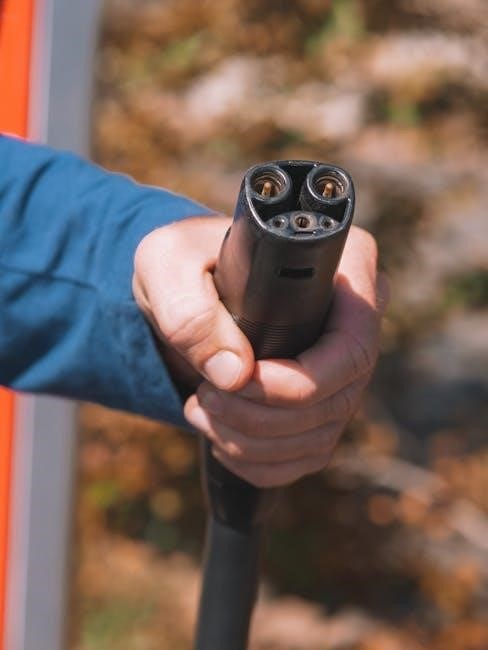
Certain Cat battery chargers demonstrate compatibility with Milwaukee accessories, specifically power adapters. The Milwaukee part number 23-81-0710 (and its variant 23810710, or 23-810710) AC/DC adapter is confirmed to work with select Cat models.
This allows users to utilize existing Milwaukee charging infrastructure with their Cat battery maintenance tools, offering increased convenience and flexibility.
Safety Precautions
Prioritize safety when using your Cat battery charger! Always disconnect the charger before working near the battery. Avoid charging in enclosed spaces – ensure adequate ventilation. Wear appropriate eye protection during charging and engine start procedures.
Never reverse polarity connections. Inspect cables for damage before each use. Do not operate the charger in wet conditions, and keep it away from flammable materials.
General Safety Guidelines
Read all instructions before operating the Cat battery charger. This equipment contains components that can cause electrical shock or burns if misused. Ensure the work area is clear and well-lit. Never attempt to modify the charger in any way.
Keep this manual readily available for future reference. Always disconnect the power source when not in use. Improper use voids the warranty.
Battery Charging Safety
Always charge batteries in a well-ventilated area, as charging produces explosive gases. Avoid creating sparks or flames near the battery during the charging process. Ensure proper polarity when connecting the clamps – red to positive (+), black to negative (-).
Never charge a frozen battery. Inspect the battery for cracks or leaks before charging. Disconnect the charger before disconnecting the clamps from the battery.
Engine Start Safety
Prior to using the engine start function, ensure the vehicle’s parking brake is firmly engaged. Confirm the transmission is in Park (automatic) or Neutral (manual). Avoid prolonged boosting attempts – limit to 10-15 seconds maximum.
Never attempt to jump-start a damaged or frozen battery. Ensure proper polarity connection to avoid sparks and potential damage to the vehicle’s electrical system.
Components and Features
Cat battery chargers boast a robust charger body with intuitive controls for selecting charge rates and modes. Heavy-duty cable clamps and connectors ensure secure battery connections. Select models, like the CBC100E, integrate a powerful power inverter, functioning as a jump starter.
Additional features include USB charging ports and a 12V DC accessory outlet for versatile power solutions on the go.
Charger Body and Controls
The Cat charger’s body is designed for durability and portability, often featuring a rolling chassis for easy movement. Controls typically include a power switch, charge rate selector (for options like 2A, 10A, 20A, or 40A), and mode selection for charging or maintainer functions.
LED indicators display charging status and potential error conditions, providing clear operational feedback to the user.

Cable Clamps and Connectors
Cat battery chargers utilize heavy-duty cable clamps to ensure a secure and reliable connection to the battery terminals. These clamps are typically color-coded (red for positive, black for negative) for easy identification and to prevent reversed polarity connections.
Connectors are designed for robust performance, resisting corrosion and providing optimal current flow during the charging process. Proper clamping is crucial for safe and effective charging.
Integrated Power Inverter (Jump Starter Models)
Certain Cat battery chargers, particularly jump starter models like the CBC100E, feature a built-in power inverter. This allows users to convert DC battery power to standard AC power for running various devices.
These inverters typically offer a 200-watt output, enabling charging of phones, laptops, and other small electronics. The integrated inverter provides versatile power solutions beyond just battery charging and jump-starting capabilities.
Operating Instructions: Standard Charging
To begin standard charging, connect the red clamp to the battery’s positive terminal and the black clamp to the negative terminal. Ensure a secure connection before proceeding. Select the appropriate charge rate based on the battery’s size and condition – automatic mode is often suitable.
Monitor the charging process via the charger’s LED indicators. The charger will automatically switch to maintainer mode once fully charged.
Connecting the Charger to the Battery
First, ensure the charger is switched off before connecting to the battery. Attach the red (positive) clamp to the battery’s positive terminal, marked with a “+” symbol. Then, connect the black (negative) clamp to the battery’s negative terminal, indicated by a “-” symbol.
Double-check the connections for security; loose clamps can prevent proper charging and pose a safety risk.
Selecting the Charge Rate
Cat battery chargers often feature multiple charge rate settings, typically indicated in amps (e.g., 2A, 10A, 20A, 40A). For smaller batteries, like those in motorcycles or lawnmowers, select a lower amperage. Larger batteries, such as those in cars and trucks, require a higher amperage for efficient charging.
Refer to the battery’s specifications or the vehicle’s owner’s manual for recommended charge rates.
Monitoring the Charging Process
During charging, regularly monitor the battery voltage and charging current using the charger’s display. LED indicators often signal charging status – red for charging, green for fully charged, or flashing to indicate an issue. Avoid overcharging, as it can damage the battery.
Automatic chargers switch to maintainer mode when fully charged, providing a trickle charge to keep the battery topped off.
Operating Instructions: Engine Start Function
Before using the engine start feature, ensure the charger is connected to the vehicle’s battery with the red clamp to the positive terminal and black to the negative. Select the engine start amperage appropriate for the vehicle’s engine size.
Turn the ignition key and briefly activate the engine start button on the charger. Do not exceed the recommended start time to prevent damage.
Connecting to the Vehicle Battery
Prior to initiating the engine start, establish a secure connection to the vehicle’s battery. Attach the red (positive) clamp firmly to the positive terminal, identified by a “+” symbol or red cover. Subsequently, connect the black (negative) clamp to a solid, unpainted metal surface of the vehicle’s chassis, away from the battery.
Ensure clamps are securely fastened to prevent sparking or poor contact during the jump-start process.
Using the Engine Start Feature
After connecting to the battery, ensure the charger is switched on. Select the Engine Start mode on the control panel. Briefly depress the Engine Start button – do not hold it for extended periods. Attempt to start the vehicle using its ignition key as usual.
If the vehicle doesn’t start, wait a few minutes before repeating the process, avoiding prolonged cranking.
Operating Instructions: Jump Starter Features
Cat jump starter models offer versatile power solutions beyond battery charging. Utilize the USB charging ports to power mobile devices like phones and tablets while on the go. The 12V DC accessory outlet is ideal for powering smaller appliances.
For larger devices, employ the integrated AC outlet, providing standard household power; These features enhance convenience during emergencies or remote work situations.
Utilizing the USB Charging Ports
Cat jump starter units feature multiple USB charging ports, typically offering 2-amp output for efficient device charging. These ports are compatible with a wide range of devices, including smartphones, tablets, and other USB-powered accessories.
Simply connect your device’s USB cable to one of the available ports to initiate charging. This provides a convenient power source when access to traditional outlets is limited, enhancing portability.
Using the 12V DC Accessory Outlet
The integrated 12V DC accessory outlet expands the charger’s versatility, allowing you to power various 12-volt devices directly from the unit. This outlet is ideal for powering coolers, lights, or other compatible accessories during outdoor activities or emergencies.
Ensure the accessory’s power draw doesn’t exceed the outlet’s capacity. Connect the accessory’s plug firmly into the 12V outlet for a stable power connection, providing convenient on-the-go power.
Employing the Integrated AC Outlet
Certain Cat jump starter models feature a built-in AC outlet, offering the ability to power standard household devices. This is incredibly useful for charging laptops, phones, or running small appliances when access to traditional power sources is limited.
Be mindful of the AC outlet’s wattage capacity and avoid overloading it. Plug your device directly into the AC outlet, ensuring a secure connection for reliable power wherever you are.
Understanding Charging Modes
Cat battery chargers offer versatile charging modes to suit different battery needs. Automatic Charging Mode intelligently adjusts the charge rate based on the battery’s condition, switching between bulk, absorption, and float stages for optimal charging.
Maintainer Mode (typically 3-Amp) provides a low, continuous charge ideal for long-term battery storage, preventing sulfation and extending battery life; Selecting the correct mode ensures efficient and safe charging.
Automatic Charging Mode
The Automatic Charging Mode is a smart feature, designed for convenience and optimal battery health. This mode cycles through three stages: bulk, absorption, and float. Initially, bulk charging delivers maximum current until the battery reaches approximately 85% capacity.
Next, absorption equalizes and fully charges the battery, then float mode maintains the charge without overcharging. It’s ideal for most 12V lead-acid batteries.
Maintainer Mode (3-Amp)
The 3-Amp Maintainer Mode is perfect for long-term battery storage or vehicles used infrequently. It provides a low, continuous charge, counteracting the natural self-discharge rate of batteries. This prevents sulfation, extending battery life significantly.
Ideal for seasonal vehicles or equipment, this mode ensures your battery is always ready when you need it. It’s a gentle, consistent charge, avoiding overcharging risks.
Troubleshooting Common Issues
If the charger fails to power on, verify the power cord connection and outlet functionality. For a battery not charging, ensure correct polarity and a secure connection with the clamps. If the Engine Start function is unresponsive, check for sufficient battery voltage and proper cable attachment.
Review the LED indicators for error codes; consult the manual for specific meanings. Always disconnect the charger before inspecting connections or attempting repairs.
Charger Not Powering On
If your Cat battery charger doesn’t power on, first confirm the power cord is securely plugged into both the charger and a working electrical outlet. Test the outlet with another device to rule out an outlet issue. Inspect the power cord for any visible damage, like cuts or fraying.
Check the charger’s internal fuse (if applicable) and replace it if blown. Ensure the on/off switch is in the ‘on’ position.
Battery Not Charging
If the battery isn’t charging, verify the cable clamps have a firm, clean connection to the battery terminals – positive to positive, negative to negative. Ensure correct polarity is observed; reversed connections can damage the charger and battery. Check the battery voltage; a severely discharged battery may not accept a charge.
Select the appropriate charge rate for the battery type and capacity. Confirm the charger is in the correct charging mode (automatic or manual).
Engine Start Not Working
If the engine start function fails, ensure the charger is securely connected to a fully charged battery. Verify the engine start cables are properly connected to the vehicle’s terminals – red to positive, black to a grounded metal part of the engine. Confirm the vehicle’s ignition is off before attempting to start.

Avoid prolonged cranking (limit to 10-15 seconds) to prevent overheating. Check for loose connections or a blown fuse within the charger.
Alternator Check Function
The Cat battery charger features an alternator check to assess your vehicle’s charging system. After starting the engine with the charger, select the alternator check mode. The charger will display a voltage reading, indicating the alternator’s output.
A reading between 13.5-14.5 volts generally signifies a healthy alternator; lower values suggest a potential issue requiring professional diagnosis. Refer to your vehicle’s manual for specific voltage requirements.
Performing an Alternator Check
To perform an alternator check, ensure the engine is running after a jump start. Select the “Alternator Check” function on the charger using the control panel. The display will then show the charging voltage being produced by the vehicle’s alternator.
Allow the engine to run for a few minutes to stabilize the voltage reading. Observe the voltage carefully; a stable reading within the recommended range indicates proper alternator function.
Interpreting Alternator Check Results
A reading between 13.5 and 14.5 volts generally indicates a healthy alternator, effectively charging the battery. Voltages below 13.5V suggest the alternator may not be providing sufficient charge, potentially indicating a failing unit or related issue.
Readings exceeding 14.5V could signify an overcharging condition, which can damage the battery; further diagnosis is crucial. Consult a qualified mechanic for any abnormal readings.
Technical Specifications
The Cat CBC40EW delivers 40 amps at 12V, while the CBC200EW provides a robust 200-amp engine start alongside its 40-amp charging capability. The CBC100E offers 25 amps for automatic battery charging.
All models require standard 120V AC input power. These chargers are designed for 12-volt lead-acid, AGM, and gel batteries, offering versatile power solutions for various applications and vehicle types.
Voltage and Current Output (CBC40EW, CBC200EW, CBC100E)
The CBC40EW outputs 12V at 40 amps for charging and boasts 110A for engine starting. The CBC200EW delivers 12V at 40 amps for charging, with a powerful 200-amp engine start. CBC100E provides 12V at 25 amps for automatic charging.
These models also feature a 3-amp maintainer mode. Output is consistent across various battery types, ensuring optimal charging performance and longevity.
Input Power Requirements
Cat battery chargers, including the CBC40EW, CBC200EW, and CBC100E, require a standard 120V AC input. The chargers are designed for typical household or jobsite power outlets. Ensure the power source is properly grounded for safe operation.
These models efficiently convert AC power to DC for battery charging and engine starting. Adapters, like the Metasources one compatible with 23-81-0710, may be needed in some cases.
Maintenance and Care
Regular cleaning of your Cat battery charger is crucial for longevity. Wipe down the charger body with a damp cloth, avoiding any water entering vents. Inspect the cable clamps and connectors frequently for damage or corrosion, replacing them as needed.
Proper cable storage prevents fraying and ensures safe operation. Store in a dry location, away from extreme temperatures and direct sunlight.
Cleaning the Charger
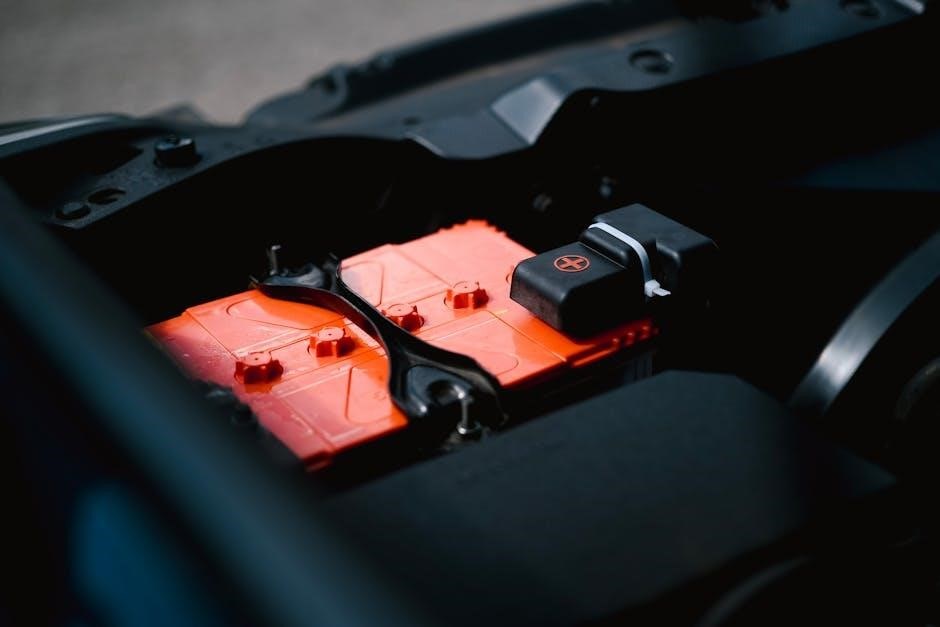
To maintain optimal performance, regularly clean your Cat battery charger. Disconnect the charger from the power source before cleaning. Use a damp cloth to wipe down the exterior housing, removing any dirt or debris.
Avoid using harsh chemicals or abrasive cleaners, as these can damage the plastic casing. Ensure no moisture enters the vents or electrical components during cleaning.
Cable Inspection and Storage
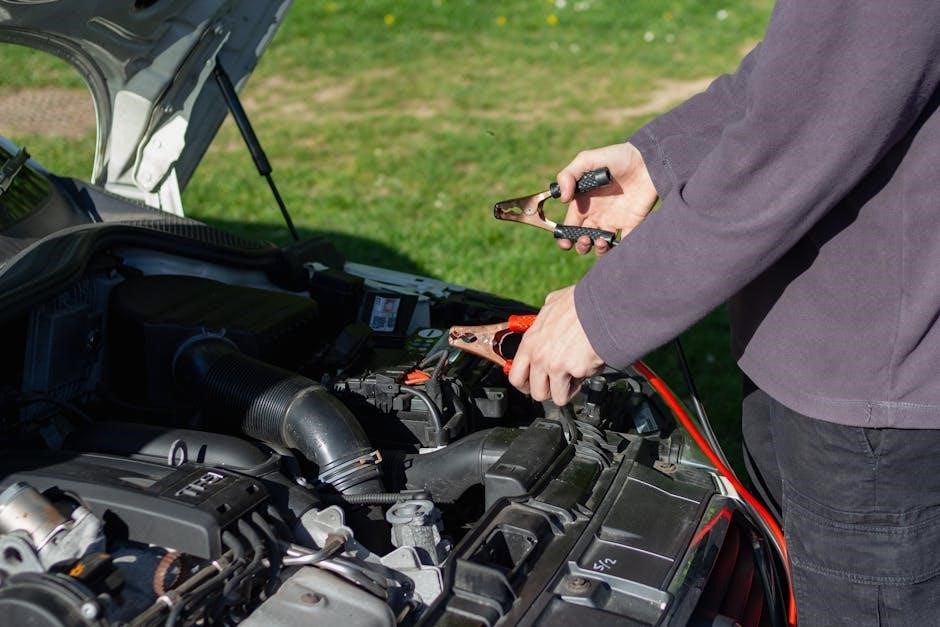
Regularly inspect the charger cables for any signs of damage, such as cracks, fraying, or exposed wires. Damaged cables pose a safety hazard and should be replaced immediately.
When storing the charger, coil the cables loosely to prevent kinking or damage. Avoid storing the charger in direct sunlight or extreme temperatures, which can degrade the cable insulation over time.
Warranty Information
Cat Battery Chargers are covered by a manufacturer’s warranty against defects in materials and workmanship. The warranty period varies by model, typically ranging from one to three years from the date of purchase.
To initiate a warranty claim, retain your proof of purchase and contact Cat customer support. Unauthorized repairs or modifications will void the warranty. See the full warranty details included with your product.
Cat Battery Charger Warranty Details
The Cat battery charger warranty covers defects in materials and workmanship for a specified period, dependent on the specific model purchased. Generally, this coverage extends for one to three years from the original purchase date.
This warranty does not cover damage resulting from misuse, accidents, or unauthorized repairs. Keep your original purchase receipt as proof of date for any claims.
Claim Procedures
To initiate a warranty claim, contact Cat’s customer support with your model number and proof of purchase. A representative will guide you through the process, potentially requiring photos or a return of the defective unit for inspection.
Ensure the charger is properly packaged to prevent further damage during shipping. Cat will, at its discretion, repair or replace the faulty charger free of charge.
Frequently Asked Questions (FAQ)
Can I use this charger on different battery types? Yes, Cat chargers are generally compatible with lead-acid, AGM, and gel batteries, but always check the specific model’s specifications for confirmation.
What does the LED indicator mean? LED colors signify charging status – red often indicates charging, green signifies fully charged, and flashing may signal an error. Refer to your model’s manual for detailed interpretations.
Can I use this charger on different battery types?
Cat battery chargers demonstrate versatility, typically supporting lead-acid, absorbent glass mat (AGM), and gel cell batteries. However, compatibility isn’t universal. Always consult your specific charger’s manual – like for the CBC40EW or CBC200EW – to verify supported battery types.
Incorrect settings can damage batteries, so confirming compatibility is crucial for optimal performance and longevity.
What does the LED indicator mean?
The LED indicator provides crucial charging status information. A solid green light generally signifies a fully charged battery or maintainer mode activation, as seen on models like the CBC100E. Flashing red often indicates a charging error or reversed polarity.
Refer to your specific model’s manual for a detailed breakdown of all LED codes and their corresponding meanings, ensuring proper operation and troubleshooting.
Resources and Support
For comprehensive assistance with your Cat battery charger, visit the official Cat website for detailed product information, downloadable manuals, and frequently asked questions. Customer support is readily available to address specific concerns or troubleshooting needs.
Contact information can be found on the Caterpillar website, offering direct access to expert technicians. Amazon product pages also provide customer reviews and Q&A sections for peer support.
Cat Official Website
The Caterpillar official website serves as a primary resource for all Cat battery charger related information. Users can access detailed product specifications, downloadable instruction manuals – including those for models like the CBC40EW, CBC200EW, and CBC100E – and safety guidelines.
Furthermore, the website provides access to warranty details, claim procedures, and a comprehensive FAQ section. It’s the definitive source for official support and updates regarding your Cat charger.
Customer Support Contact Information
For direct assistance with your Cat battery charger – including models CBC40EW, CBC200EW, and CBC100E – Caterpillar provides dedicated customer support channels. While specific contact details aren’t readily available in provided snippets, visiting the official Caterpillar website is crucial.
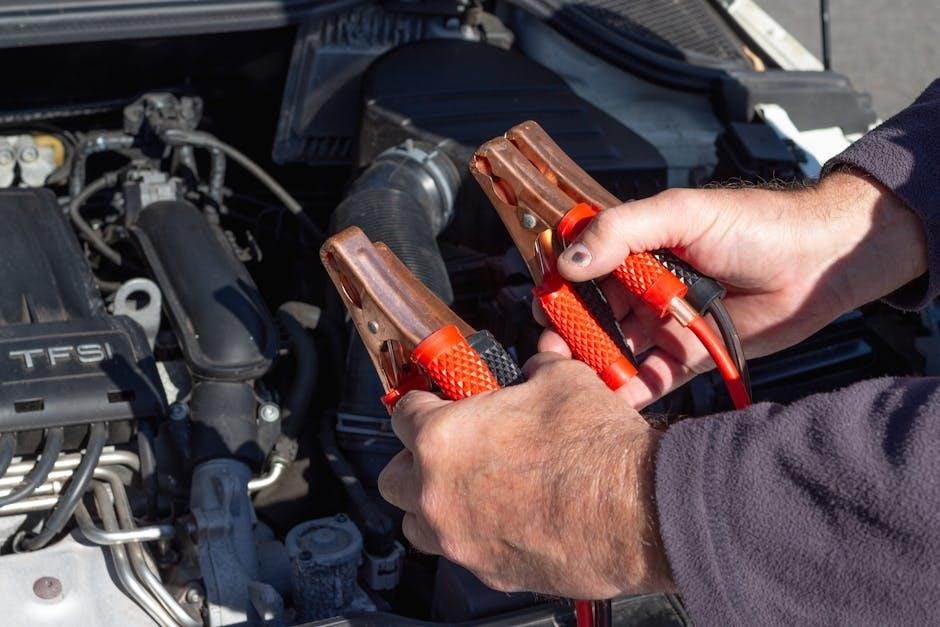
There, you’ll find phone numbers, email addresses, and potentially live chat options. Support can assist with troubleshooting, warranty claims, and locating replacement parts for your charger.